
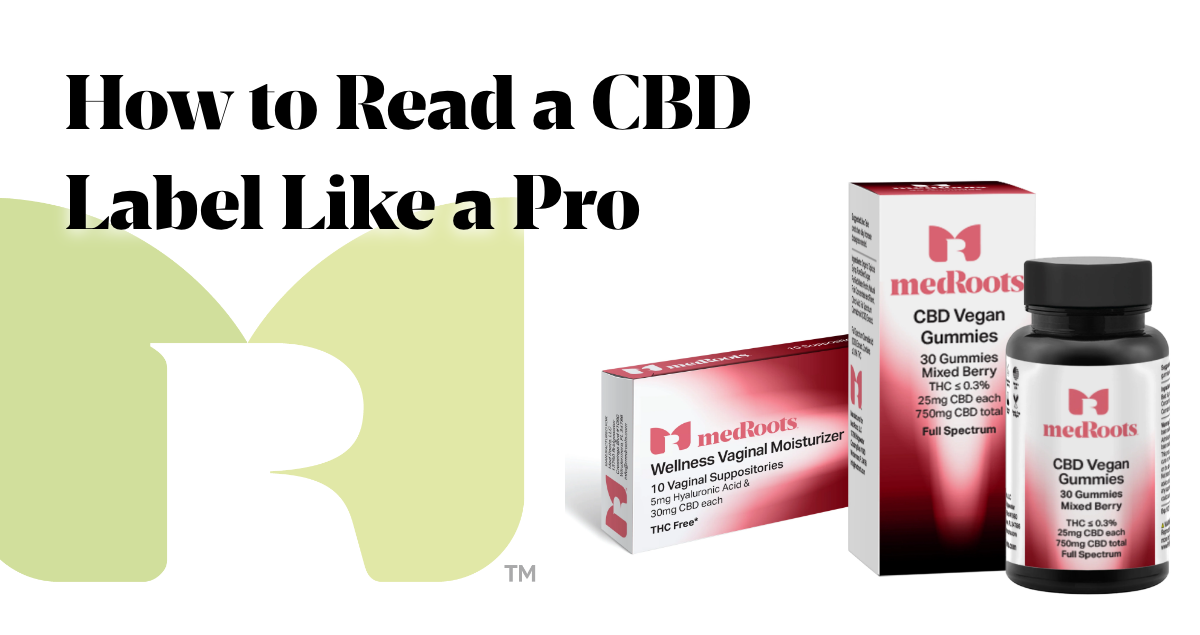
CBD shopping can sometimes feel like it requires its own dictionary. Full spectrum. Broad spectrum. CBD isolate. Milligrams per serving. Hemp extract. Cannabinoids. Third-party testing.
Wait…weren’t you just trying to buy a gummy? With so many CBD products available, knowing how to read a label is one of the easiest ways to become a more confident consumer. A good label should help you understand exactly what you’re getting, how much you’re getting, and how the product is intended to be used.
The good news is that you don’t need to become a CBD expert overnight. Once you know what to look for, those labels become much easier to understand. Grab your imaginary magnifying glass. We’re going CBD label shopping.
1. Start With the Type of CBD
One of the first things to look for is what type of CBD the product contains.
You’ll generally encounter three terms:
Full Spectrum CBD: Contains CBD along with other naturally occurring compounds from the hemp plant, which can include additional cannabinoids and THC within applicable legal limits.
Broad Spectrum CBD: Contains CBD and other hemp-derived compounds but is typically formulated without detectable THC.
CBD Isolate: A purified form of CBD that does not contain the other naturally occurring cannabinoids found in full-spectrum or broad-spectrum extracts.
Why does this matter?
Because two products that both say “CBD” on the front of the package can offer different formulations.
Knowing which type you’re buying helps you choose a product based on your personal preferences, lifestyle, and comfort level.
Don’t just look for the letters C-B-D. Look for the details.
2. Find the Actual Amount of CBD
Here’s where labels can get a little tricky. A CBD product may have a large number prominently displayed on the front—500mg, 1000mg, 1500mg—but you need to understand what that number represents.
Does it refer to the CBD in the entire package? Or the amount in each individual serving?
For example, a bottle of gummies could list the total amount of CBD in the entire container while also providing a separate amount for each gummy. That’s a pretty important distinction.
When comparing products, look for both the total CBD content and the amount per serving. The serving information will give you a much clearer picture of what you’re actually using at one time.
3. Check the Serving Size
Next stop: serving information.
Don’t automatically assume that one gummy, one dropper, or one application equals the manufacturer’s suggested serving.
Read the directions.
The label should tell you the recommended serving size and provide instructions for using the product appropriately.
This becomes particularly important when switching between CBD formats.
A gummy, tincture, topical, patch, or suppository can contain different amounts of CBD and have completely different directions for use.
Never assume the instructions from one product apply to another.
4. Read the Full Ingredient List
CBD might be the ingredient you’re shopping for, but it isn’t necessarily the only ingredient in the product. Look at the entire list. Depending on the product, you might find carrier oils, flavorings, sweeteners, botanical ingredients, magnesium, or other components in the formulation.
Reading the complete ingredient list is especially important if you have allergies, dietary preferences, or ingredients you personally choose to avoid. It’s also an easy way to evaluate a company’s transparency. You shouldn’t have to solve a mystery to understand what’s inside a wellness product.
5. Know What “THC-Free” Means for You
If avoiding THC is important to you, don’t assume every CBD product is THC-free. Remember those CBD types we talked about earlier?
Full-spectrum products can contain THC within applicable legal limits, while other formulations may be designed specifically for consumers looking for a THC-free option. Read the product description and labeling carefully so you understand what you’re purchasing.
This can be especially important for people who undergo workplace drug testing or have other personal or professional reasons for avoiding THC. If drug testing is a concern, it’s important to understand that using CBD products may still carry risks depending on the formulation, testing sensitivity, and other factors.
When in doubt, do your homework before adding a product to your routine.
6. Look Beyond the Label for Third-Party Testing
Here’s one of the most important CBD shopping habits you can develop: Look for independent, third-party testing. A product label tells you what a company says is inside the package. Third-party laboratory testing can provide additional information about the product’s cannabinoid profile and quality.
Many reputable CBD companies make Certificates of Analysis—often shortened to COAs—available to consumers. A COA may include information about cannabinoid content and testing for certain contaminants. It can also help you compare what’s stated on the product label with laboratory findings.
You don’t need to understand every line of a laboratory report to use it as a helpful shopping tool. Start by confirming the report matches the product you’re considering, then check the cannabinoid information. Also check the testing date—a current report is much more useful than one from years ago.
7. Pay Attention to Other Label Basics
Don’t focus so much on CBD terminology that you forget the everyday information you’d check on any other wellness product.
Look for:
- Expiration or best-by dates
- Storage instructions
- Allergen information
- Warnings
- Usage directions
- Manufacturer or company information
- Batch or lot numbers when available
These details can tell you a lot about how seriously a company approaches product transparency. And remember: more buzzwords on the front of the package don’t necessarily mean a better product. Clear information beats flashy marketing every time.
8. Be Wary of Labels That Promise Too Much
This is a big one. CBD is a wellness product—not a magic cure-all.
Be cautious of products or brands making dramatic promises about what CBD will do for you, particularly claims that a product can diagnose, treat, cure, or prevent specific diseases or medical conditions.
Responsible CBD companies should help you understand their products without promising unrealistic results. At MedRoots, we believe wellness decisions should start with good information. That’s why education and transparency are such important parts of helping people navigate CBD. If you want to continue learning, the MedRoots blog covers everything from choosing different CBD formats to building CBD into everyday wellness and self-care routines.
9. Compare Products Based on More Than Price
Two CBD products can look nearly identical on a shelf while being very different once you read the fine print. Before deciding one is a better deal, compare:
CBD type: Full spectrum, broad spectrum, or isolate?
CBD amount: How many milligrams are in the entire product and each serving?
Ingredients: What else is included?
Testing: Is third-party testing available?
Format: Does the product actually fit your lifestyle?
Transparency: Can you easily find the information you need?
The cheapest option isn’t necessarily the best value—and the most expensive product isn’t automatically the highest quality. The goal is to understand what you’re paying for.
10. Choose the CBD Format That Fits Your Life
Finally, don’t get so caught up in numbers that you forget one of the most practical considerations:
Will you actually enjoy using it?
Someone who travels frequently may love the convenience of gummies or patches. Someone who wants greater flexibility might prefer an oil tincture. Others may be interested in topicals, suppositories, or intimacy-focused CBD products.
There isn’t one universally “best” way to use CBD. That’s why learning how to read labels is so useful. Once you understand what you’re looking at, you can compare different formats and make decisions based on your own preferences rather than whatever product has the flashiest packaging.
Explore all MedRoots CBD products to see how different formats, strengths, and formulations compare.
Shop Smarter, Feel More Confident
You don’t need a chemistry degree to shop for CBD. Start with the basics: identify the CBD type, check milligrams per serving, read the ingredients and directions, look for third-party testing, and be skeptical of products that promise too much.
Most importantly, ask questions. A CBD company should make it easy for you to understand what you’re putting into—or onto—your body.
At MedRoots, we believe informed choices are an important part of creating a wellness routine that works for you. Whether you’re comparing your first CBD products or you’ve had a routine for years, there’s always more to discover.
Ready to keep learning? Explore the MedRoots blog for approachable guides, CBD FAQs, wellness tips, and conversations designed to help you become a more confident CBD consumer. Or explore MedRoots products to put your new label-reading skills to work.